Showing posts with label holy. Show all posts

Friday, July 12, 2019

Thatha and his ten-Rupee meal


A viral video on social media has put the spotlight back on Ramu S, who has been selling simple, home-style meals at his tiffin centre for less than ₹10 for over five decades
At 85, Ramu S is unstoppable. He wakes up early to ensure that his Valli Tiffin Centre near Anna bus stand opens at 7 am sharp. His customers will be waiting to enjoy piping hot idlis, fluffy uttapams, and ghee-laden pongal with coconut or tomato chutney, and sambar for ₹10 each. After 10 am his focus shifts to preparing the afternoon meal consisting of rice, sambar, rasam, butter milk, a poriyal, and pickle. Not less than 300 people drop in daily between noon and 3.30 pm to either take away or sit in the eight-seater food shack and eat the simple and homely meal.
In a city like Madurai with a vibrant food culture, Ramu Servai stands tall with his hole-in-the-wall eatery located in a commercially prime area dotted with fancy hotels and restaurants. It is so because only in his eatery, you get a wholesome afternoon meal just for ₹10.
And Ramu thatha — as he is fondly called — has a heart of gold. He has no intention of making money by selling food to those who cannot afford a good healthy meal a day. “My wife and I started by selling idlis and vadais for ten Paise each in 1965. Then, she started cooking full meals and we had two regular customers. We sold it for ₹1.25 and offered the same for free to the needy,” he says. Soon, their customers swelled in numbers.
The death of his wife in 2015 has shattered thatha. “I promised Puranathammal that I will continue to run the eatery, come what may,” he says with moist eyes. His friend, trained by his wife, cooks the food now and Ramu thatha continues to sell it at the same nominal price. But the promise he made to his wife is not easy to keep. “I don’t buy the ration rice but purchase it in the open market for ₹43 a kilogram,” he says.
“Nowhere else will you get a full and tasty meal for ₹10,” says S Shakthivel from Karur who regularly visits Madurai for work and rarely misses an opportunity to eat here. People who can’t pay ₹10 for the meal are requested to pay at least ₹2. “This way, they respect the food they eat,” says Ramu. Many eat without paying at all, and he usually refrains from charging senior citizens unless they insist on paying. “I only want to see satisfied faces leave my place.” His story has spread wide, prompting well wishers to donate in kind. “Acts like these strengthen my will to keep going,” he asserts and remembers his landlord, who has kept the shop’s rent at ₹500 per month for more than three decades now, with gratitude. “Other shopkeepers around me pay at least ten times more,” he informs us.
His customers are an interesting mix. Medical college hostellers and other students from the vicinity, patients and their attendants, police personnel, and travellers in transit turn up in equal numbers, as do farmers and hordes of petitioners who come to meet the Collector, migrant labourers, loaders and rickshaw pullers, and the homeless.Staff from the Collectorate nearby and other offices regularly drop in for a take away. Many, he says, also offer to pay ₹50 instead of ₹10 for the meal. Despite his difficulties, Ramu refuses to take extra rupee from anyone.
Every day, he gets 30 kilograms of rice, five litres of sambar, four litres of rasam, 2.5 kilograms of vegetables cooked. Ramu thatha spends from his pocket on days there are no donors and if there is a shortage of items. And he distributes extra food among the disadvantaged who line the temple nearby. There is a silent determination and compassion in what he does.The world has begun to take notice of thatha. Several YouTube videos have been made on him but he remains unaffected by the attention.
What affects him is that he has outlived two of his sons and a grandson. And also for the first time in 54 years, he was forced to close his eatery last week. “I had fever and many customers came enquiring,” he says. June 9 was also his wife’s fifth death anniversary. “I renewed my promise to her: That I will continue to sell the cheapest meals possible and serve all without discrimination.”

Wednesday, July 25, 2018

Yoga and smoothies

The trending health food spaces: yoga cafés, where you can enjoy wholesome, nutritious food in serene surroundings whether or not you are a yogi Quaint little vegetarian cafes, often attached to yoga studios, are coming up all over the country. They offer a contemporary vibe, greenery, and nutritious food that call for mindful eating. We explore a few.

Yogi-sthaan, Bengaluru Plot 89, 11thCross Road, Indiranagar, Stage 1
Yoga studio, B&B, café, retreat. When Ajitsingh Tapasvi conceived Yogi-sthaan, all he wanted was a fluid space where one could ‘just be’.“I wanted this space to be like home — you can treat it as your office or as a café; you can do yoga orread; you can even stay over,” he explains.“We ask no questions and force nothing upon you. When a guest walks in, he gets a copper water bottle with two kansa glasses. After that, we do not disturb him.” Open, green, unobtrusive, and relaxed, Yogi-sthaan’s food is vegetarian, uses macrobiotic practices, ancient grains and traditional methods of cooking. Try their hash browns that come with mozzarella, red and yellow pepper, spinach and herbs served with yoghurt dressing. Or simply ask for tea with toast and liquid jaggery.

Mystic Yoga Café, Kolkata 20A,Camac Street, 2nd Floor
The yoga practitioners coming to Mystic Yoga centers asked what they could eat after an invigorating session of yoga; some just wanted to spend more time in the peaceful environment of the studio. It’s what led Abhishek Maheshwari to start the cafés (four, across the city). They serve small meals, snacks, and an all-day breakfast.“Our meals are cooked using the principals of Ayurveda and are based on four pillars: healthy, tasty, satisfying and affordable,” says Maheshwari. If the no-fuss décor, fresh menu, and wide range of spiritual books doesn’t bring you back, the spinach and chickpea soup, or the vegan omelette might.

Yogi’s Belly, Hyderabad Isha Life, PlotNo 522,Road 27,Jubilee Hills
White wrought-iron chairs set under a large mango tree, bare white walls and a chequered tile-grass floor beneath, Yogi’s Belly is the zen you need in the middle of the busy Jubilee Hills. An extension of the Yoga Studio, crafts store, and Mahamudra, a fine-dining restaurant, at Isha Life Foundation, the place marries the traditional with the modern. Try the ice tea with turmeric and sabja seeds, drumstick soup, ragi mudde, and rice waffles.

Artjuna, Goa No 972, Monteiro Vaddo, Anjuna Bardez
Attached to an Iyengar-style yogashala that also has a quaint boutique, on the Anjuna beach, the Artjuna Goa was set up in an old Portuguese house, and has both indoor and outdoor seating. Moshè Imbar, who owns the place, tells us,“Our café primarily serves Mediterranean cuisine.” A lively space, and one of the few yoga cafés that has a small section of non-vegetarian fare, Artjuna serves an all-day breakfast and small eats. Its USP is the freshness of the ingredients, home-made cakes and coffee, and a vegan menu. The

Yoga House, Mumbai Nargis Villa,Water Bungalow, Sherly Rajan Road, Bandra West A bright space in the heart of suburban Mumbai, The Yoga House Café takes you away from the noise and traffic of the city, even if for a little while. Sheer curtains, white furniture and sea-green walls make the place a haven. Attached to the Yoga House, the food here is based on macrobiotic recipes rooted in ancient dietary wisdom and traditions, and the menu centers around whole grains and local, seasonal produce. Try the 10-grain toast, home-made muesli, fresh juices and smoothies and the signature hash brown at this plastic-free hangout.

Yogi’s Belly Café, Chennai New Number 117, Old Number 50, Luz Church Road, Mylapore 
The Yogi’s Belly Café brings together the best of Indian culture: yoga, traditional cuisine and artisanal craftsmanship. Located within the Isha Life premises, it blends traditional with contemporary.“The menu here has been curated with a unique approach to health and fitness that stems from a deep understanding of the yogic sciences,” says Meena Thennaapan, who manages the centre. Café offerings like raw turmeric juice, papaya and red capsicum salad, and black sesame kulfi blend the regular and the exotic. With large rattan chairs, comfy couches and sheer curtains, the café is a modern take on an ancient science.                                                            Thanks to whatsapp msg 

Sunday, August 16, 2015

Snanam: Water Purification in Hinduism

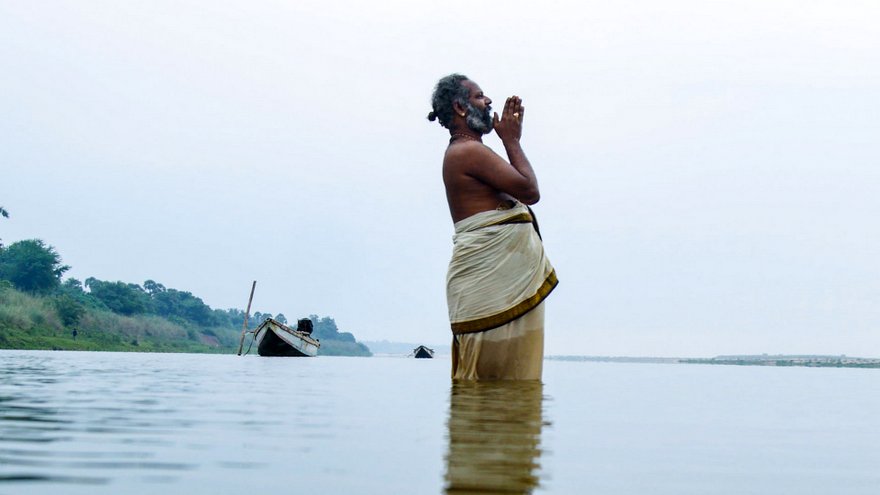
Water purifies the body and the mind. It rejuvenates the spirit. It liberates the psyche. The waters of the Ganga River can even erase karma from the past and give moksha, or cessation from the cycle of birth and death. From ancient times, Vedic texts have extolled the religious, therapeutic, and spiritual powers of water.
Most religious texts recommend an early bath around 4 o’clock a.m., which is considered the Brahma muhoratham or most auspicious time of day. The Vedas recommend that bachelors should have a bath once a day, married people twice a day, and saints three times a day.
The Garuda Purana extols the virtues of snanam in the following manner:
Water nourishes and sustains the spirit as well as the body. Water is high among the elements, as it purifies and uplifts the individual from the mundane to the transcendental. Mountain water, spring water, and rainwater collected are highly beneficial and considered noble by the wise.
Taking a bath in spring water, rainwater or river water can bring benefits to both body and mind. These benefits can be further multiplied if you were to chant a Sanskrit mantra called the Snaman Mantra before taking bath. Since the Snanam Mmantra has to do with water, by taking water in your right palm and performing acaman while reciting the following verse, your mind could be lifted from the mundane into the sublime:
apvithra: pavitrova sarvasthaam gatopivaa,
ya: smaret pudareekaaksham sa: baahyaabhyantara shuchi:
sri harirhari: pundarikakshaaya nama: iti atmanam prokshya
After reciting the mantra you could sprinkle some water in different directions to purify the place.
Godavari-Maha-Pushkaram
Hindi Translation of the Snanam Mantra:
In Hindi, the mantra can be understood in the following manner:
Hindi mein yeh is prakaar hai:
apvitra: pavitrova sarvasthaam gatopivaa,
ya: smaret pundareekaaksham sa: baahyaabhyantara shuchi:
iska arth hai…pavitra ya apvitra … kisi bhee avastha ko praapt (gatopiva) (kaisa bhee vyakti ) yadi pundareekaaksha (pundareek + aksh = kamal + nayan – arthaat vishnu) ka smaran kare to vah baahar aur bheetar (baahya+ aabhyantar) se pavitra (shuchi:) ho jaataa hai . shree harirhari: pundareekaakshay nama: iti aatmaanum prokshya . (pandit ji hatheli par jal daalte hein aur vyakti se peene ke liye kahte hein , aur us samay aisa bolte hein ….)– is prakaar ( iti ) apne aap ko (aatmaanum) jal se pavitra karke ya jal se ponch kar ya shuddha karke (prokshya) shree hari vishnu ko naman karo.
For those who do not understand Hindi, an English translation follows.
av184_getting_Ready_for_snanam
The English Translation of the Snanam Mantra:
“Whether a person is pure (pavitra) or impure (apvitra) that is, a person might be in any situation or condition, he can still realize his goal. Gatopiva means any kind of person. Vadi pundareekaaksha means the lotus-eyed Vishnu (pundareek plus aksh= kamal plus nayan which means Lord Vishnu). If one recites the name of the lotus-eyed Vishnu then he will from both inside and outside (baahya plus aabhyantar) become pavitra or pure (shuchi). Panditji or the Hindu priest places Ganga jal or Ganga water on the palm of a person’s hand and asks him to drink it and then recite the snanam mantra. In this manner (iti), on one’s own accord (aatmaanum), one could purify oneself, or wipe oneself or purify oneself (prokshya) while taking the name of Shree Vishnu.”
In the Hindu tradition there are two kinds of bathing-the bathing of the body and the bathing of the mind. The first begins with Om apo-hish-ta may-o-bhuva and ends with Om-apo-jana-yatha cha-na. This is then followed by sprinkling water on the head, chest and feet.
The notions of pollution and purification are quite important in daily life, social gatherings and festivals. The Indian festival Deepawali, for instance, is associated with fire which destroys evil, but the daily ritual of snanam also removes iniquity and malevolence. Both fire and water are seen as cleansing agents, literally and symbolically.
Deepawali commemorates the victory of Lord Ram over Ravana. Some also see it as a victory of Lord Krishna over the demon Narakasura. Deepavali symbolizes the victory of light over darkness-Thamasoma Jyothirgamaya, or from darkness to light. Deepawali falls on a new moon or amaavasya in the aasweyuja month of the Hindu (Lunar) calendar. On Naraka Chaturdasi, the day before Deepawali, Lord Krishna took a bath to cleanse the blood and grime from his battle with Narakasura. Hence, it is customary to take an oil bath (nalugu pindi snanam) before sunrise.
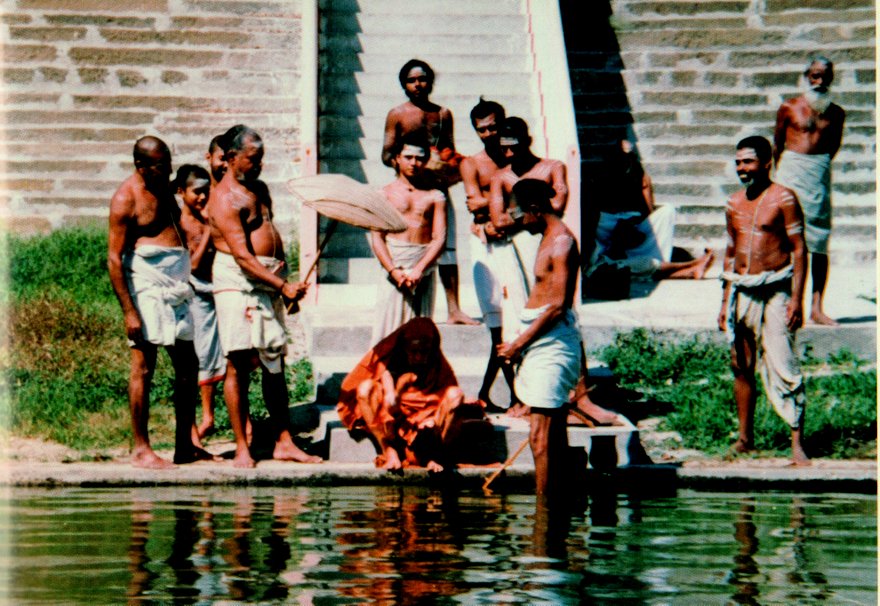
Purifying life through snanam is not just for divine beings. Ordinary beings too can clean themselves with a bath. During the Kumbh Mela at Prayag Raj (Allahabad), millions of devotees from all parts of India take a dip in the holy Ganga River, believing that this act will bring them untold merit. Some say that on festival days, the water of the Ganga River transforms itself into nectar and anyone who bathes in it will erase all his sins.
Recently biologists are talking about the contamination of river water from industrial effluents and the unhygienic condition of such waters, but this has not undermined the belief of people in the transcendental properties of Ganga jal.
Most physical exercises in India require a bath before their commencement. Yoga recommends that before doing the Hatha Yoga[2] or Pranayam[3] it is important to take a bath. A ritual cleansing begins with washing the head and then moving down to the feet. Through snanam we not only control the body, but also purify the mind. Water functions both as a physical phenomenon and a symbol ritual.
cropped-2012-634828847291479319-147
Not only in the Hindu but also in the Buddhist tradition, bathing has great significance. Rules for using public bathing facilities were clearly laid down for bhikkus or Buddhist students. The bhikkus were not allowed to sport in water, nor allowed to rub their bodies against wood or against each other. They were allowed to shampoo their hair, but not to use wooden objects or string of beads to rub their bodies while taking a bath. If a bhikku suffered from skin scabs he was permitted the use of a mallaka or back scratcher made of slit crocodile teeth.
In the Hindu tradition water stands for rejuvenation, prosperity and the male-female principle. Lord Vishnu is the Lord of the water and his consort Lakshmi the mistress of prosperity. Therefore bathing in a river can activate the forces of Lakshmi and Narayana in one’s life. When we recite the mantra ‘Eh-vang’ we exhort the water of the river to carry our spirit to Vishnu, the source of rejuvenation.
Most parts of India are hot and dusty. Bathing becomes an important activity to remove the grime and dirt from the body. Therefore many ancient Indian texts highlight the therapeutic and symbolic significance of snanam. Over the centuries the notion of snanam has entered daily life, social gatherings and festivals of most Indian communities. Some devotees prepare themselves for twelve years to go to Allahabad and have a bath in the Ganga River, called kamya snanam, while others are satisfied with an ordinary bath, or nitya snanam. There are others who have a bath in rain when the sun is shining; this is called the dhivya snanam. There are so many different kinds of snanam, each bringing its own benefits. Today snanam has become the sine qua non of good health, serenity and hygiene. http://www.indiadivine.org/snanam-water-purification-in-hinduism/

Saturday, April 4, 2015

ட்வென்ட்டி 20 பரிகாரத் தலங்கள்

அரியக்குடி தென் திருவேங்கடமுடையானுக்கும் தாயாருக்கும் 12 வெள்ளிக்கிழமை அர்ச்சனை செய்து வழிபட்டால் விரும்பிய வேலை கிடைக்கும்.

திருநாங்கூர் திருப்பதிகளுள் ஒன்றான திருக்காவளம்பாடி ராஜகோபால சுவாமிக்கு அவலும் வெண்ணெயும் நிவேதித்தால் மழலை வரம் கிட்டும்.

திருக்கோலக்காவில் அருளும் தொனிப்ரதாம்பாளுக்கு வாக்வாதினி அர்ச்சனை செய்து, அம்பிகைக்கு அபிஷேகித்த தேனை உண்ணச் செய்தால் சரியாகப் பேச வராத குழந்தைகள் நன்கு பேசும்.

செங்கல்பட்டிற்கு அருகில் உள்ள சிராத்த சம்ரட்சணப்பெருமாளை தொடர்ந்து அமாவாசையில் தரிசித்தால் பித்ரு தோஷங்களும் பி த்ரு சாபங்களும் விலகும்.

திருநெல்வேலி மாவட்டம், நாங்குநேரியில் உள்ள வானமாமலைப்பெருமாளுக்கு அபிஷேகம் செய்யப்பட்ட எண்ணெயை சரும நோய் உள்ளவர்கள் தடவி வர அந்த நோய் நீங்கும்.

கடும் ஜுரத்தால் பாதிக்கப்பட்டவர்கள் திருநெல்வேலி நெல்லையப்பர் ஆலயத்தில் அருளும் ஐராவதேஸ்வரருக்கு மிளகு அரைத்துத்  தடவி வெந்நீரால் அபிஷேகம் செய்து அர்ச்சிக்க, காய்ச்சல் விலகிவிடும்.

சிறுநீரக நோய்கள் நீங்க லால்குடிக்கு அருகே உள்ள ஊட்டத்தூரில் அருளும் பஞ்சநதக் கல்லால் செய்யப்பட்ட நடராஜப்பெருமானை தரிசித்து, வெட்டிவேர் மாலை சாத்தி தினமும் வெட்டிவேர் போட்ட நீரை அருந்தலாம்.

திருக்காரவாசல் கண்ணாயிரமுடையாருக்கு மூலிகைத் தைல அபிஷேகம் செய்து, அத்திப்பழத்தை நிவேதித்து பிரசாதமாகப்பெற்று 48 நாட்கள் தைலத்தை தலையில் தேய்த்தும் தேனில் ஊறிய அத்திப்பழத்தை உண்டும் வந்தால் கண் நோய்கள் தீரும்.

திருநீலக்குடி மனோக்ஞநாத சுவாமிக்கு அர்ச்சனை செய்து நீல நிற பட்டுத்துணியையும் எள்ளையும் தானமளித்தால் மரண பயம்  விலகும்.

சென்னை-மயிலாப்பூர் கோலவிழியம்மன் ஆலயம் அருகில் உள்ள வாலீஸ்வரரை வணங்கினால் எதிரிகள் தொல்லை விலகும்.

திருநெல்வேலி மாவட்டம், கோடகநல்லூர் ப்ருஹன்மாதவனுக்கு அர்ச்சனை செய்தால் கனவில் பாம்பு வந்து தொல்லை தராது. இது  ஒரு சர்ப்பதோஷ பரிகாரத் தலம்.

வைத்தீஸ்வரன் கோயில் வைத்யநாதரையும் தையல்நாயகியையும் வழிபட்டு, ஆட்டு வாகனத்தில் ஆரோகணித்திருக்கும் அங்காரகனுக்கு அர்ச்சனை செய்ய, செவ்வாய் தோஷம் நீங்கும்.

திருச்சி கன்டோன்மென்ட் லாசன்ஸ் சாலையில் உள்ள ஐயப்பன் ஆலயத்தில் உள்ள நாகதேவதைகளுக்கு பூஜை செய்து பிரசாதமாகத் தரப்படும் பால் பாயசத்தை உண்டு, மஞ்சளை தினமும் அணிந்து கொள்ள, திருமணத் தடை, புத்திரபாக்கியத் தடை நீங்குகின்றன.

திருவிற்குடி கங்களாஞ்சேரி வீரட்டேஸ்வரரையும் அம்பிகையையும் தரிசித்து ஆலயத்திலிருந்து கல் எடுத்து வந்து வீட்டில் வைத்தால் வாஸ்து தோஷம் நீங்கும்.

லால்குடி திருமங்கலம் சாமவேதீஸ்வரர் ஆலய சனிபகவானை தரிசித்து அர்ச்சனை செய்தால் இழந்த செல்வங்களை மீண்டும் பெறலாம்.

திருச்சி-துடையூர் கடம்பவன விஷமங்களேஸ்வரர் திருக்கோயில் அருகிலுள்ள வாதக்கல் முனி சமாதியை வழிபட்டால் அனைத்து வகை வாத நோய்களும் நீங்கும்.

கலைகளில் சிறந்து விளங்க ஊத்துக்காடு காளிங்கநர்த்தனருக்கு அபிஷேகம், அர்ச்சனை செய்து வழிபட வேண்டும்.

எல்லா பிரார்த்தனைகளும் நிறைவேற நாச்சி யார்கோயில் கல் கருடனுக்கு அர்ச்சனை செய்து அமிர்தகலசம் எனும் நைவேத்தியத் தைப் படைக்க வேண்டும்.

மாதவிடாய்க் கோளாறுகள் நீங்க பெட்டவாய்த்தலை (திருச்சி) மத்யார்ஜுனர் ஆலய பூவாய் சித்தர் சந்நதியில் சீட்டெழுதிக் கட்டினால் நிவாரணம் பெறலாம்.

சாக்கோட்டை சிவபுரத்தில் உள்ள சிவகுருநாதசுவாமி ஆலயத்தில் பைரவமூர்த்திக்கு வடைமாலை சாத்தி வழிபட, வழக்குகளில்  வெற்றி பெறலாம்.